
Essential Ski Accessories for a Ski Holiday What Beginners Really Need
A ski holiday can feel like a packing test before it feels like a holiday. Skis, boots and outerwear get most of the attention, but small accessories often decide whether a day on the mountain feels comfortable or frustrating.
Cold hands, fogged goggles, painful socks or a forgotten neck warmer can cut a lesson short. The good news is that beginners do not need to buy every gadget in the ski shop. Focus on the items that keep you warm, dry, comfortable and compliant with resort or ski-school rules.
This guide separates the true essentials from the extras, with tips for families, school ski trips and changing mountain weather. Where useful, it also points to Team Up Skiwear category pages so you can check current accessories and ski-trip package options before you pack.

The ski accessories beginners should prioritise
For a first ski holiday, start with the accessories that affect warmth, visibility and fit. These matter more than novelty extras.
Gloves or mittens
Hands get cold quickly on chairlifts, during lessons and when carrying skis. Ski gloves and mittens should be insulated, water-resistant and long enough to cover the wrist area well.
Mittens are often warmer because fingers share heat. Gloves give more finger movement, which helps with zips, buckles and poles. Young children and nervous beginners often manage better with mittens, as warmth is the bigger issue.
Look for:
A secure wrist closure
A cuff that fits over or under the jacket sleeve
Enough room to move fingers without excess space
A spare pair for children, if possible
Team Up Skiwear’s current accessories range is a practical place to check for ski gloves and mittens, especially when buying for a school trip or family group.
Goggles
Goggles protect the eyes from wind, snow, glare and poor visibility. Sunglasses can work in mild off-slope moments, but they are not a good replacement for goggles during lessons.
Beginners should choose goggles that fit comfortably with their helmet. There should not be a large gap across the forehead, as cold air can get in. Anti-fog ventilation helps, but goggles still need care. Avoid placing them lens-down on tables or wiping the inside when wet.
For mixed weather, a medium-tint lens is usually the safest all-round choice. Very dark lenses suit bright days, while low-light lenses help in cloud or snow.
Check the live range of ski goggles before travelling, and match youth sizes carefully for children.
Ski socks
Ski socks are not the same as thick walking socks. A good ski sock is warm, breathable and smooth inside a ski boot. Too much bulk can create pressure points, reduce circulation and make feet colder.
Pack at least two pairs for a short trip, and more for a week. Children on school trips should have enough pairs to avoid wearing damp socks the next day.
Good ski socks should:
Reach above the top of the ski boot
Feel smooth around the shin and ankle
Fit snugly without bunching
Dry reasonably quickly overnight
You can compare current options in ski socks if your existing socks are too short or too bulky.
Thermal layers
Thermal base layers help manage warmth underneath a ski jacket and salopettes. Cotton is a poor choice for skiing because it absorbs moisture and dries slowly. Synthetic or merino-style base layers work better because they help move moisture away from the skin.
Beginners often overdress on the first day, then sweat during lessons. That sweat can feel cold later on lifts or in windy conditions. A base layer plus a mid-layer gives more control than one thick jumper.
For school trips, thermal sets are easier to label, count and pack. Team Up Skiwear’s base layers and thermals are worth checking alongside outerwear packages.
Neck warmers
A neck warmer closes the gap between jacket and helmet. It is useful in wind, snow and cold lift queues. It is also easier than a scarf, which can be bulky and awkward around equipment.
Choose a soft, breathable tube-style warmer. For children, avoid anything too loose or long. It should sit comfortably over the lower face when needed, but not affect breathing or vision.
Hats for off-slope use
A ski helmet is for skiing, but a warm hat is useful away from the slopes. Pack one for walking to dinner, watching lessons, travelling on transfer day or spending time in resort.
A beanie or fleece-lined hat packs easily and stops children borrowing their ski helmet as everyday headwear.
Sunscreen and lip protection
Snow reflects sunlight, and UV exposure can still be strong on cold or cloudy days. Pack a high-protection sunscreen and a lip balm with SPF. Apply before lessons and keep lip balm in a jacket pocket if allowed.
This is one of the most common forgotten items, partly because skiing feels like a cold-weather holiday rather than a sun holiday.
A suitable helmet
Many resorts and ski schools expect or require helmets, especially for children. Even where they are not compulsory, beginners should follow current resort guidance and ski-school rules.
A suitable ski helmet should be designed for snow sports, fit level on the head and work with goggles. Do not substitute a cycling helmet. If hiring, check the fit before the first lesson. If buying, try it with goggles and adjust the internal fit system if it has one.
You can review available ski helmets before deciding whether to buy or hire.
Must-have items and optional extras
Not every accessory deserves space in the suitcase. Use this split when packing.
Must-have for most ski holidays | Optional extras |
Ski gloves or mittens | Glove liners |
Goggles | Spare goggle lens |
Ski socks | Hand warmers |
Thermal base layers | Boot warmers |
Neck warmer | Balaclava for very cold weeks |
Off-slope hat | Sunglasses for resort use |
Sunscreen and SPF lip balm | Small clothes drying clips |
Suitable helmet | Helmet cover for identification |
Optional does not mean useless. It means you can usually ski without it, especially as a beginner. If you are travelling in a very cold month, going high altitude, or sending a child on a school trip, a few extras can make life easier.
How to prepare for changing mountain weather
Mountain weather can change quickly. A morning can start sunny, turn windy at lunch and finish in falling snow. Beginners should pack for a range of conditions rather than one forecast.
A practical system is:
Base layer Keeps warmth close to the body and helps manage moisture.
Mid-layer Adds warmth on colder days. A fleece or light insulated layer works well.
Waterproof outer layer Ski jacket and salopettes protect against snow, wind and wet chairlifts.
Accessories Gloves, goggles and neck warmer adjust comfort through the day.
For brighter days, sunscreen and goggles matter. For snowy or windy days, goggles, neck warmers and dry gloves matter. For cold lift rides, a good hat after skiing and a warm mid-layer can make the rest of the day more comfortable.
Pack spares where possible. Even one spare pair of socks and backup gloves for a child can solve many common problems.
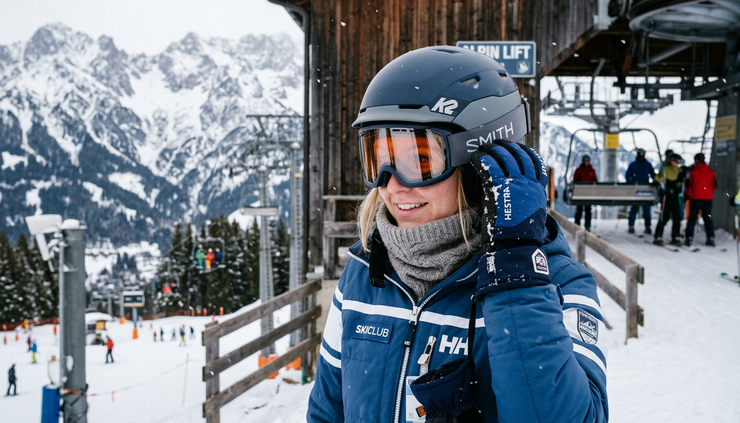
Tips for parents checking children’s ski gear
Children’s ski gear needs checking before travel, not the night before the first lesson. Size, comfort and labelling matter.
Use this simple parent check:
Ask your child to try everything on together, including helmet, goggles, gloves and jacket.
Check that goggles sit neatly with the helmet and do not press painfully on the nose.
Make sure gloves are easy to put on and remove without adult help.
Confirm ski socks reach above the boot line and do not wrinkle.
Label gloves, helmet, goggles, socks, thermals and neck warmers.
Pack sunscreen and lip balm in a named pouch.
Check the school kit list against the resort or ski-school requirements.
For younger children, practise using zips, wrist straps and glove closures. On a cold morning, small tasks feel harder. Familiar gear reduces stress before lessons.
If your child is joining a group trip, Team Up Skiwear’s school ski trip packages can help keep clothing and accessories consistent across the packing list. Check live package details before ordering, as sizes, colours and included items can change.
Packing accessories efficiently for a school ski trip
School ski trips need organised packing. Children may be sharing rooms, moving between coach, hotel, boot room and slopes, and managing kit without parents nearby.
A simple packing method works best.
Use packing cubes or clear bags
Group accessories by use:
Slope essentials
Evening and off-slope items
Spares
Toiletries and sun protection
Pack a slope bag inside the main bag
This can include goggles, gloves, neck warmer, sunscreen, lip balm and a spare pair of socks. It should be easy to find on the first ski morning.
Keep helmet and goggles protected
Place goggles inside their pouch if supplied. Pack them inside the helmet or between soft clothing. Do not crush them at the bottom of the suitcase.
Roll thermal layers
Rolling saves space and makes it easier to count outfits. Pack base layers as sets if possible.
Send one checklist copy with the child
A printed list helps children repack at the end of the week. Put it inside the suitcase lid or in a document wallet.
Team Up Skiwear’s ski trip packages are useful when you want a clear starting point. Add accessories from the current ski accessories category to fill any gaps, rather than buying extras that the school does not require.
Common forgotten items
These are the small pieces that often get missed:
SPF lip balm
Sunscreen
Spare ski socks
Neck warmer
Off-slope hat
Glove liners or spare gloves
Goggle pouch
Glasses strap or prescription sports solution, if needed
Medication or personal items allowed by the school policy
Labels for children’s kit
A small laundry bag for damp socks and thermals
For families, keep these in one place while packing. For school trips, put the easy-to-lose items in a named zipped pouch.
A simple ski accessory checklist
Use this as a final check before travelling.
Ski gloves or mittens
Goggles
Ski socks
Thermal base layers
Mid-layer or fleece
Neck warmer
Warm hat for off-slope use
Sunscreen
SPF lip balm
Suitable ski helmet
Spare socks
Spare gloves for children, if available
Labels for children’s items
Goggle pouch or soft case
Resort or ski-school kit list
Before you buy, check what is included in your ski holiday package, what the school provides and what must be hired locally. Some items, such as helmets, may be available to hire. Others, such as socks, thermals and lip balm, are better packed from home.
Follow resort and ski-school requirements
Every trip has its own rules. Some ski schools require helmets. Some schools set specific kit expectations for pupils. Resorts may also have guidance for lift use, visibility and weather closures.
Read the latest information from:
Your tour operator
The school trip organiser
The resort
The ski school
The hire shop, if you are renting equipment
When rules differ, follow the stricter requirement. It is easier to pack correctly at home than to search for missing kit in resort.
FAQs
Do beginners need to buy every ski accessory?
No. Beginners should prioritise gloves or mittens, goggles, ski socks, thermal layers, a neck warmer, sunscreen, lip protection and a suitable helmet. Extras can wait until you know what you prefer.
Are mittens better than gloves for skiing?
Mittens are often warmer, while gloves offer more finger movement. Children and cold-handed beginners may prefer mittens. Skiers who want more dexterity may prefer gloves.
Can children wear normal socks for skiing?
Normal socks are not ideal. Ski socks are longer, smoother and designed to sit inside ski boots without bunching. Thick everyday socks can make boots uncomfortable.
Should I buy or hire a ski helmet?
Both can be suitable if the helmet fits properly and meets resort or ski-school requirements. Hiring can work well for a first trip. Buying may suit regular skiers or children who need familiar kit.
What should go in a school ski trip hand luggage bag?
Follow the school’s rules first. Useful items may include travel documents, medication handled according to policy, a warm layer, hat, gloves, lip balm and a change of socks. Do not pack restricted liquids or sharp items.
Final takeaway
The best ski accessories are the ones that quietly do their job. They keep hands warm, vision clear, feet comfortable and children prepared for long days in changing weather.
Start with the essentials, check the resort and ski-school rules, then add optional extras only where they solve a real problem. If you are buying kit, use Team Up Skiwear’s live ski accessories and ski trip packages pages to check current options, sizes and availability before you travel.


Comments